29 CFR 1910.134
Respiratory Protection training online
Why respirators are needed, how they are selected, and how to inspect, put on, seal check, use, clean, store and maintain them, what to do when one fails, and the medical warning signs, under OSHA's respiratory protection standard.
- 9 narrated lessons, 40–60 minutes, self-paced
- English or Spanish: lessons, narration, illustrations and test
- 20-question test, 80% to pass, unlimited retakes
- Certificate issued on passing, valid 12 months, verifiable online
- For: Workers required to wear respirators in construction, manufacturing, painting, welding, agriculture, cleaning, labs and maintenance, and their employers
Lessons
What the standard requires, and where it is covered
Each row is a requirement from 29 CFR 1910.134, in plain English, with the lessons that cover it.
| Citation | Requirement | Covered in |
|---|---|---|
| 1910.134(a) | Permissible practice: prevent atmospheric contamination with engineering controls as far as feasible; respirators when controls are not feasible or while they are being instituted; a suitable respirator provided when necessary to protect health, under a respiratory protection program. | 1. Why respirators are needed and how they can fail |
| 1910.134(b) | Definitions: air-purifying and atmosphere-supplying respirators, APF, canister or cartridge, ESLI, filtering facepiece, fit factor, IDLH, loose- and tight-fitting facepieces, MUC, negative and positive pressure, oxygen deficient (below 19.5 percent), PAPR, SAR, SCBA, user seal check. | 2. Types of respirators: capabilities and limitations; 3. Selecting the right respirator: hazards, protection factors and IDLH; 1. Why respirators are needed and how they can fail |
| 1910.134(c)(1) | Written respiratory protection program with worksite-specific procedures for selection, medical evaluation, fit testing, routine and emergency use, maintenance, breathing air, training, and program evaluation; updated as conditions change (general instruction here; the employer supplies its own program). | 5. Written program, medical evaluation and fit testing |
| 1910.134(c)(2) | Voluntary use: employer determines the use will not create a hazard and provides Appendix D; medical evaluation and cleaning, storage, and maintenance for voluntary users other than filtering facepiece users. | 9. Breathing air, voluntary use, and your training |
| 1910.134(c)(3) | Program administrator qualified by training or experience commensurate with the program's complexity. | 5. Written program, medical evaluation and fit testing |
| 1910.134(c)(4) | Respirators, training, and medical evaluations provided at no cost to the employee. | 1. Why respirators are needed and how they can fail; 9. Breathing air, voluntary use, and your training |
| 1910.134(d)(1) | Selection based on the hazard and on workplace and user factors; NIOSH-certified respirators used within their certification; hazard evaluation with a reasonable exposure estimate and the contaminant's chemical state and physical form, or the atmosphere is treated as IDLH; sufficient models and sizes. | 3. Selecting the right respirator: hazards, protection factors and IDLH |
| 1910.134(d)(2) | Respirators for IDLH atmospheres: full facepiece pressure-demand SCBA certified for at least 30 minutes, or full facepiece pressure-demand SAR with auxiliary self-contained supply; escape-only respirators certified for escape; oxygen-deficient atmospheres treated as IDLH except under Table II. | 3. Selecting the right respirator: hazards, protection factors and IDLH; 8. Emergencies, malfunctions and medical warning signs |
| 1910.134(d)(3)(i)(A) | Assigned protection factors from Table 1 and its notes, including combination respirators used in the appropriate mode. | 3. Selecting the right respirator: hazards, protection factors and IDLH |
| 1910.134(d)(3)(i)(B) | Maximum use concentration: APF times the exposure limit; capped at the IDLH level or the cartridge's limit; never applied to IDLH conditions. | 3. Selecting the right respirator: hazards, protection factors and IDLH |
| 1910.134(d)(3)(ii) | Respirator appropriate for the chemical state and physical form of the contaminant. | 4. Filters, cartridges and change schedules |
| 1910.134(d)(3)(iii) | Gases and vapors: atmosphere-supplying respirator, or air-purifying respirator with a NIOSH-certified ESLI or a cartridge change schedule based on objective information, described in the written program. | 4. Filters, cartridges and change schedules |
| 1910.134(d)(3)(iv) | Particulates: atmosphere-supplying respirator, or air-purifying respirator with a NIOSH-certified particulate filter (N, R, P series under 42 CFR 84). | 4. Filters, cartridges and change schedules |
| 1910.134(e)(1)–(e)(6) | Medical evaluation before fit testing or use; PLHCP; Appendix C questionnaire or equivalent exam; confidential administration at a convenient time; follow-up exam; supplemental information to the PLHCP; written recommendation with a copy to the employee; PAPR where a negative pressure respirator would increase health risk. | 5. Written program, medical evaluation and fit testing; 8. Emergencies, malfunctions and medical warning signs |
| 1910.134(e)(7) | Additional medical evaluations: reported signs or symptoms, recommendation by the PLHCP, supervisor or administrator, program or fit-test observations, and workplace changes that substantially increase physiological burden. | 8. Emergencies, malfunctions and medical warning signs |
| 1910.134(f) | Fit testing for tight-fitting facepieces with the same make, model, style, and size; before initial use, with a different facepiece, and at least annually; additional tests after physical changes; reselection if fit is unacceptable; OSHA-accepted QLFT and QNFT protocols; QLFT limited to fit factors of 100 or less; QNFT pass levels of 100 (half) and 500 (full); positive pressure facepieces tested in negative pressure mode. | 5. Written program, medical evaluation and fit testing; 8. Emergencies, malfunctions and medical warning signs |
| 1910.134(g)(1) | Facepiece seal protection: no facial hair or other condition between the seal and the face or interfering with valve function; glasses, goggles, and other PPE worn so they do not interfere with the seal; user seal check each time a tight-fitting respirator is put on. | 6. Inspecting, putting on, seal checking and removing your respirator |
| 1910.134(g)(2) | Continuing respirator effectiveness: surveillance of conditions; leaving the area to wash, on breakthrough, resistance change, or leakage, and to replace elements; replacement or repair before returning. | 8. Emergencies, malfunctions and medical warning signs |
| 1910.134(g)(3) | IDLH procedures: standby employee(s) outside, communication, trained and equipped rescuers with positive pressure SCBA and retrieval equipment or equivalent, notification before rescue entry. | 8. Emergencies, malfunctions and medical warning signs |
| 1910.134(g)(4) | Interior structural firefighting: two in, two out, and SCBA for all (awareness). | 8. Emergencies, malfunctions and medical warning signs |
| 1910.134(h)(1) | Cleaning and disinfecting: clean, sanitary respirators in good working order; intervals for exclusive-use, shared, emergency, and fit-test or training respirators; Appendix B-2 or equivalent manufacturer procedures. | 7. Cleaning, storage, inspection and repair |
| 1910.134(h)(2) | Storage: protection from damage, contamination, dust, sunlight, extreme temperatures, excessive moisture, and damaging chemicals; no deformation of facepiece or exhalation valve; emergency respirators accessible, in clearly marked compartments, per manufacturer instructions. | 7. Cleaning, storage, inspection and repair |
| 1910.134(h)(3) | Inspection: routine respirators before each use and during cleaning; emergency respirators monthly and before and after use; escape-only before being carried into the workplace; inspection content including elastomer pliability; SCBA monthly with cylinders recharged at 90 percent; certification records for emergency respirators. | 6. Inspecting, putting on, seal checking and removing your respirator; 7. Cleaning, storage, inspection and repair |
| 1910.134(h)(4) | Repairs: defective respirators removed from service; repairs by trained persons with the manufacturer's NIOSH-approved parts and per the manufacturer's recommendations; valves, regulators, and alarms only by the manufacturer or a manufacturer-trained technician. | 7. Cleaning, storage, inspection and repair |
| 1910.134(i) | Breathing air quality and use: Grade D air (oxygen 19.5 to 23.5 percent, condensed hydrocarbons 5 mg/m³ or less, CO 10 ppm or less, CO2 1,000 ppm or less, no noticeable odor); cylinder certificates of analysis; compressor intake, purifying beds with a change tag, CO or high-temperature alarms; incompatible couplings (awareness level). | 9. Breathing air, voluntary use, and your training |
| 1910.134(j) | Filters, cartridges, and canisters labeled and color coded with the NIOSH approval label; label not removed and kept legible. | 4. Filters, cartridges and change schedules |
| 1910.134(k)(1)(i) | Training: why the respirator is necessary and how improper fit, usage, or maintenance can compromise its protective effect. | 1. Why respirators are needed and how they can fail; 3. Selecting the right respirator: hazards, protection factors and IDLH |
| 1910.134(k)(1)(ii) | Training: the limitations and capabilities of the respirator. | 2. Types of respirators: capabilities and limitations; 3. Selecting the right respirator: hazards, protection factors and IDLH; 4. Filters, cartridges and change schedules |
| 1910.134(k)(1)(iii) | Training: how to use the respirator effectively in emergency situations, including when the respirator malfunctions. | 8. Emergencies, malfunctions and medical warning signs |
| 1910.134(k)(1)(iv) | Training: how to inspect, put on and remove, use, and check the seals of the respirator (general instruction here; the employer supplies hands-on practice with the respirator issued). | 6. Inspecting, putting on, seal checking and removing your respirator |
| 1910.134(k)(1)(v) | Training: the procedures for maintenance and storage of the respirator. | 7. Cleaning, storage, inspection and repair |
| 1910.134(k)(1)(vi) | Training: how to recognize medical signs and symptoms that may limit or prevent the effective use of respirators. | 8. Emergencies, malfunctions and medical warning signs |
| 1910.134(k)(1)(vii) | Training: the general requirements of the standard (scope, controls first, program, selection, medical evaluation, fit testing, use, maintenance, breathing air, identification, training, evaluation, records). | 1. Why respirators are needed and how they can fail; 3. Selecting the right respirator: hazards, protection factors and IDLH; 5. Written program, medical evaluation and fit testing; 9. Breathing air, voluntary use, and your training |
| 1910.134(k)(2) | Training conducted in a manner understandable to the employee. | 9. Breathing air, voluntary use, and your training |
| 1910.134(k)(3) | Training provided before the employee is required to use a respirator. | 1. Why respirators are needed and how they can fail; 9. Breathing air, voluntary use, and your training |
| 1910.134(k)(4) | Prior training within the last 12 months for new employees, if the employee can demonstrate knowledge; repeated no later than 12 months from the previous training. | 9. Breathing air, voluntary use, and your training |
| 1910.134(k)(5) | Retraining annually, and when changes make training obsolete, when knowledge or use shows inadequacies, or when otherwise necessary for safe use. | 9. Breathing air, voluntary use, and your training |
| 1910.134(k)(6) | Appendix D information provided to employees who wear respirators when not required. | 9. Breathing air, voluntary use, and your training |
| 1910.134(l) | Program evaluation: workplace evaluations, and regular consultation with respirator users on fit, selection, use, and maintenance, with problems corrected. | 9. Breathing air, voluntary use, and your training |
| 1910.134(m) | Recordkeeping: medical records under 1910.1020, fit test records until the next fit test, written program retained, records available to affected employees on request. | 9. Breathing air, voluntary use, and your training |
| 1910.134(m)(2) | Fit test records: employee, type of test, make, model, style and size, date, and results; retained until the next fit test. | 5. Written program, medical evaluation and fit testing |
| 1910.134(o) Appendix A | Fit testing procedures (mandatory): respirator selection and comfort, user seal check before testing, no hair in the seal, test exercises, QLFT agents (isoamyl acetate, saccharin, Bitrex, irritant smoke) and QNFT protocols (awareness level; the employer or its fit tester performs the test). | 5. Written program, medical evaluation and fit testing |
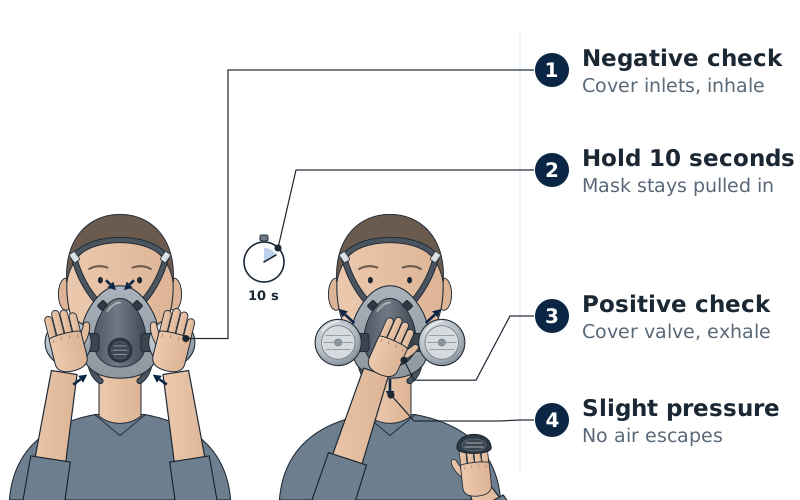
| 1910.134(o) Appendix B-1 | User seal check procedures (mandatory): positive and negative pressure checks, or equally effective manufacturer procedures; not a substitute for fit testing. | 6. Inspecting, putting on, seal checking and removing your respirator |
| 1910.134(o) Appendix B-2 | Respirator cleaning procedures (mandatory): disassembly, washing at 110°F (43°C) maximum, disinfecting, thorough rinsing, drying, reassembly, and testing. | 7. Cleaning, storage, inspection and repair |
| 1910.134(o) Appendix C | OSHA Respirator Medical Evaluation Questionnaire (mandatory): confidentiality, administration during working hours, topics covered. | 5. Written program, medical evaluation and fit testing; 8. Emergencies, malfunctions and medical warning signs |
| 1910.134(o) Appendix D | Information for employees using respirators when not required (mandatory): follow manufacturer instructions, choose certified respirators for the contaminant, do not use beyond the respirator's design, keep track of your own respirator. | 9. Breathing air, voluntary use, and your training |
Beyond the minimum
- Particles versus gases and vapors versus oxygen deficiency, and why the category decides the respirator type.
- How air moves through inhalation and exhalation valves, and why a seal gap bypasses the filter.
- Negative versus positive pressure compared side by side, and demand, continuous-flow and pressure-demand modes.
- A worked maximum use concentration example with an IDLH cap.
- The Table II altitude exception for oxygen-deficient atmospheres, at awareness level.
- NIOSH N, R and P filter series and 95, 99 and 100 efficiency levels from 42 CFR 84.170.
- The ANSI/ISEA K13.1 cartridge color convention: black, white, yellow, green and magenta.
- Practice scenarios matching a filter or cartridge to drywall dust, solvent degreasing, oil-based spray painting and low oxygen.
- The Appendix A fit test exercise sequence and the 15-minute no eating, drinking, smoking or gum rule for taste tests.
- Step-by-step half-mask donning and N95 nosepiece shaping, and a removal sequence for leaving a contaminated area.
- Spectacle kits for full facepieces and loose-fitting PAPRs as an option for workers with beards.
- Malfunction responses for PAPR, airline and SCBA alarms.
- Interior structural firefighting two-in, two-out rule under 1910.134(g)(4), at awareness level.
- The right to raise safety concerns with OSHA and the prohibition on retaliation.
What your employer provides
Employers remain responsible for the written program, medical evaluations, fit testing, and training on the specific respirators and hazards at their worksite under 29 CFR 1910.134.
The certificate
Lists your name, the standard, the completion date, the valid through date, and a verification number with a QR code. Page two lists the training elements covered.
Training staff?
Buy seats, invite people by email, and track completion on a dashboard. Buy seats.